My score for the color test was a 2. The areas that were hardest for me (where the 2 came from) were hues 23 and 24 that are between green and blue (teal). In order to complete the test I places chips where I knew for sure they belonged, then with the rest I swapped them until it looked right. This was useful because I now know that blue-green is an area I should get feedback on now to make sure it’s right.
Variety in art can be simply defined as anything that add additional interest to a design rather than the surface or subject of the art. This is useful in art making because once you get past what you want to represent in your art, you can extend it to create variety, add interest, and make a piece that really speaks to an audience. I think this knowledge of variety can apply to other forms of art when you add the use of balance, emphasis, scale, and rhythm. In drawing, it’s important to represent something realistically (if that’s your goal) but also add a form of style which can also create variety. In graphic design, it’s crucial to have variety in your work so it stands out from basic images that can be glanced over and not even considered as art. This is definitely something that should be known for any artist or graphic designer for their work to develop their own style and get recognition and succeed.
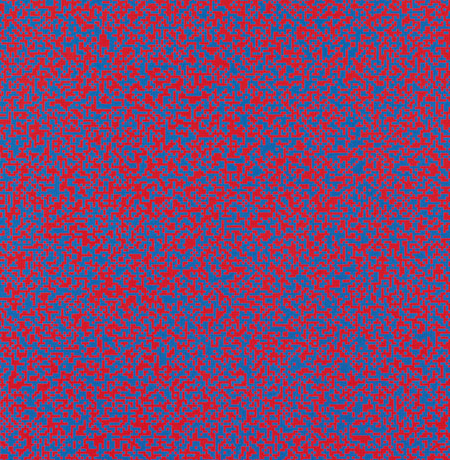
The first piece that caught my eye was done by François Morellet and it consists of 40,000 red and blue squares.
François Morellet, Random Distribution of 40,000 Squares using the Odd and Even Numbers of a Telephone Directory, 1960
What really struck me about this work is the literal randomness of the squares and the feeling that it achieves. It almost hurts your eyes when you look at it for too long, and the “only” thing that went into it was assigning evens or odds to red or blue and going through thousands of phone numbers to pick what color to paint on each individual square. While this may seem like an ineffective way to create a piece like this, it communicates that Morellet’s idea was to create something unpredictable but at the same time tamed by the lack of variety in color choice.
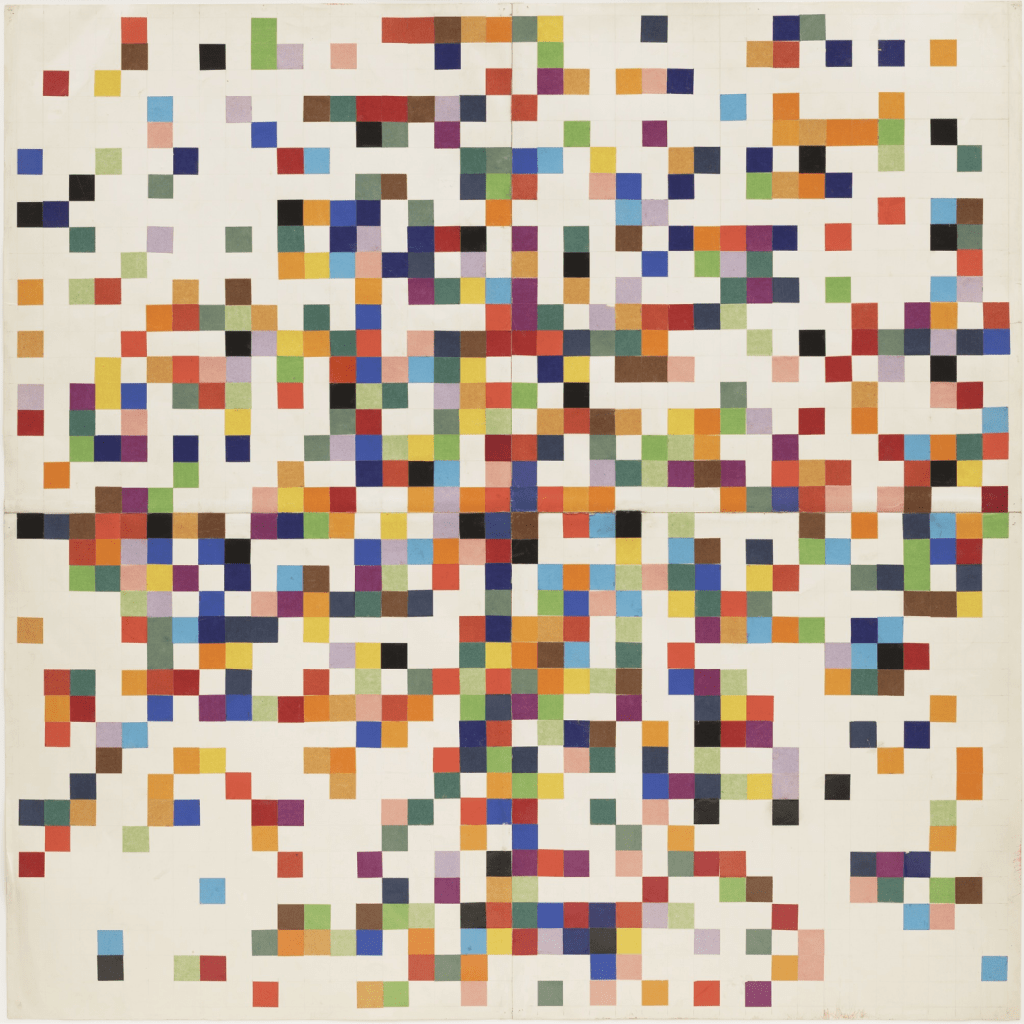
Another work that stuck out to me was a piece by Ellsworth Kelly who used a method that we just did – cutting and pasting color coated paper, but instead he did it randomly in order to convey a fuller piece of art.
Ellsworth Kelly, Spectrum Colors Arranged by Chance II, 1951
This piece stood out to me instantly because it reminded me of how my workstation looked as I worked on the hues from project 1. He randomly assigned each color chip to a place on the collage, and while our project was more methodical, he used the same method of small squares to achieve this look. Because his method was also randomized, it suggests that he didn’t have a strict end goal but wanted to communicate the relationships of each color chip in the piece.
Throughout this first project in Design & Color, I didn’t only learn a lot about the process of mixing and creating colors with gouache but about myself and my capabilities as well. Switching from an economics major to a graphic design major is a big jump, especially with my only art exposure in the last 5 or so years being one photo + design class in high school. While painting 50-100 chips isn’t exactly what I expect myself to be doing 5 years down the road, the basics of color are definitely a baseline I’ll need for a successful graphic design career. I definitely impressed myself towards the end of this project, and after being intimidated with my classmates’ skills towards the beginning I’m pleasantly surprised that the work I produced looks and feels successful.
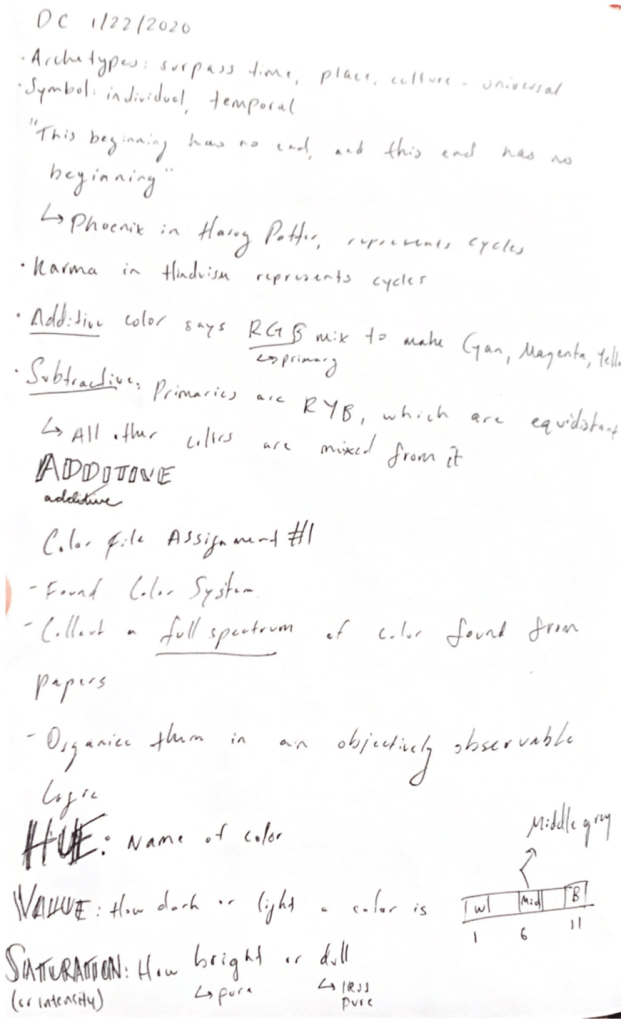
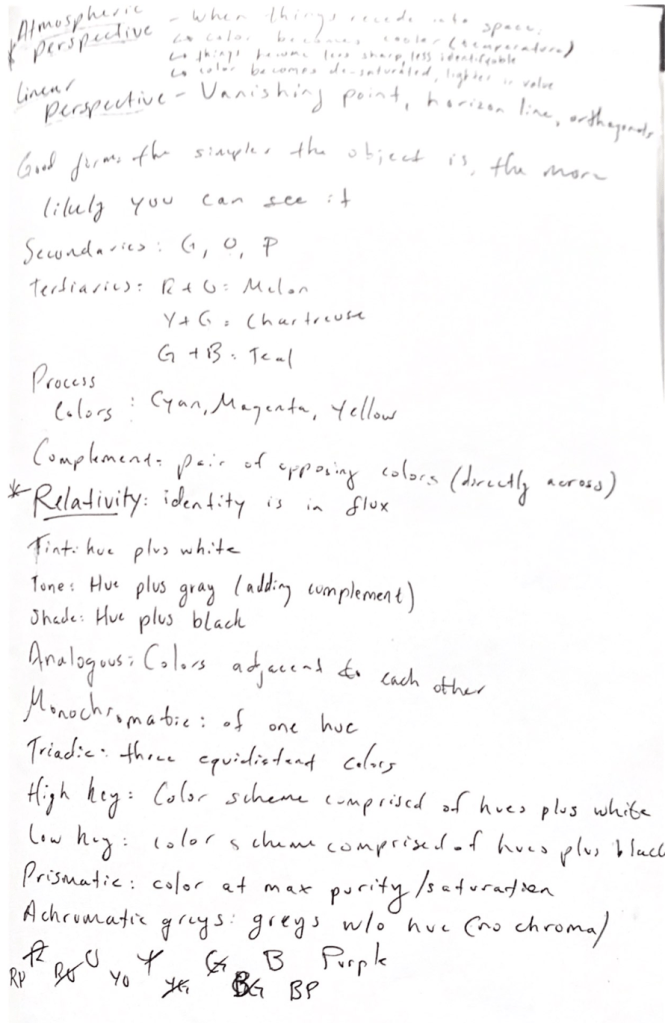
Not only was this first project a good experience for me to kick off more art projects like this in the future, but it was humbling as I can now compare myself with the people around me and always have a little competition in the back of my mind which will be key when I have to build my graphic design portfolio that will be compared to hundreds of others when entering the field. For now I’m happy with my entrance into the program but I have to stay committed and maintain a high level of work ethic that I’ve been working on developing throughout the semester. Included at the bottom of this post are glimpses of my notes throughout our lectures.
My personal mission statement is to use my own creative energy and personal understanding of the world around me to create unique work that speaks for itself. The ability to be understood by different people in different contexts each in their own way is important to me; if I have an intent in mind for a certain piece it should always be detached from the viewer’s opinion as everyone understands art differently. Unique work is hard to pursue as it’s easy to get inspiration on social media and ultimately reproduce something already done. Personal and unique style isn’t something that comes overnight, it must be worked on for years to finally be complimentary with one’s goal. Nevertheless, in order to develop my own personal style I have to trust my creative understanding and knowledge of the essence of the present day.
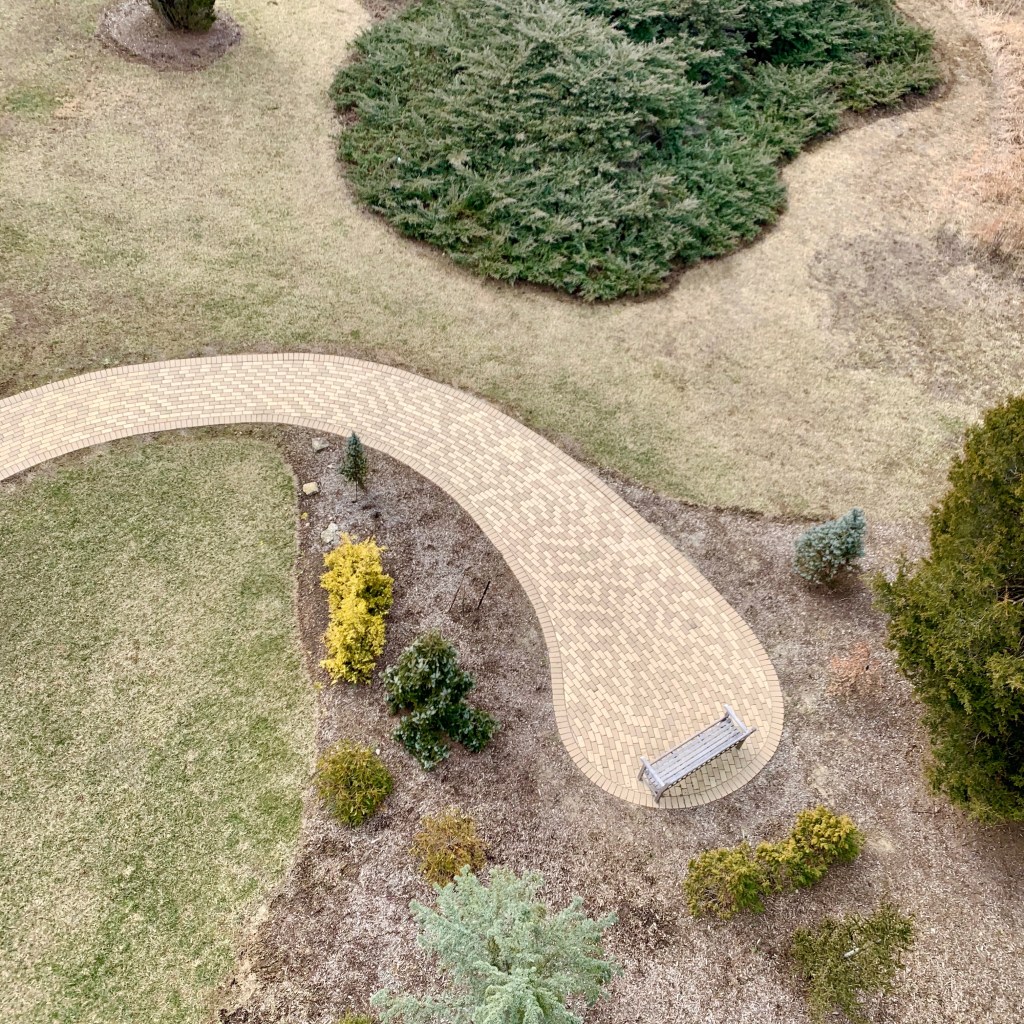
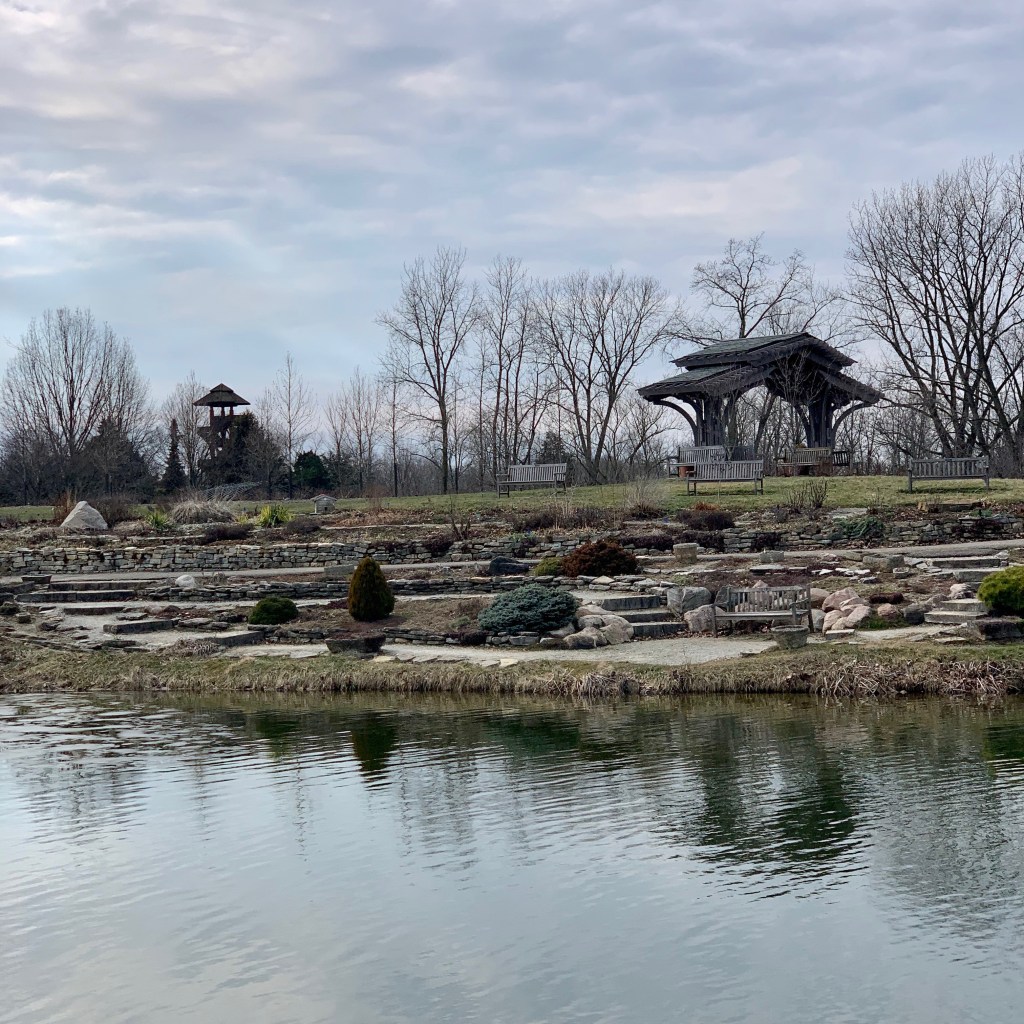
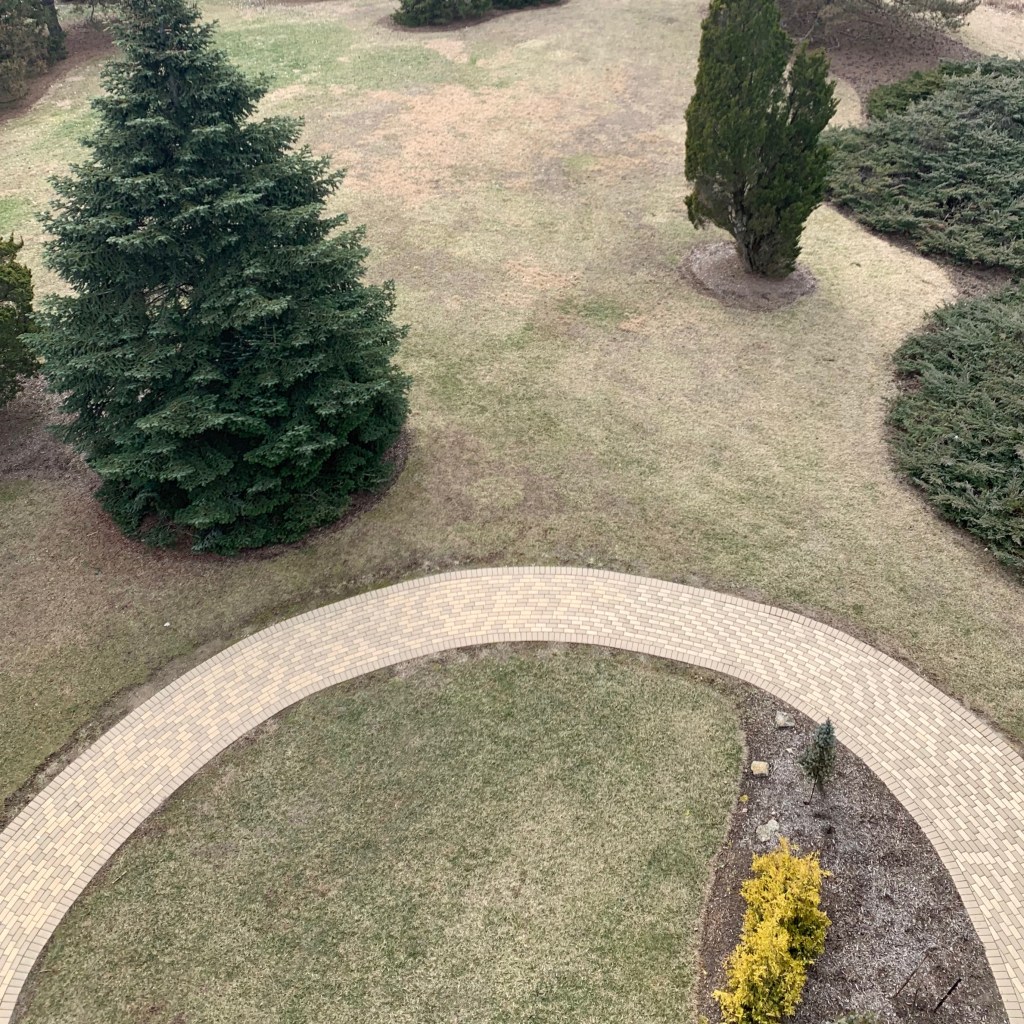
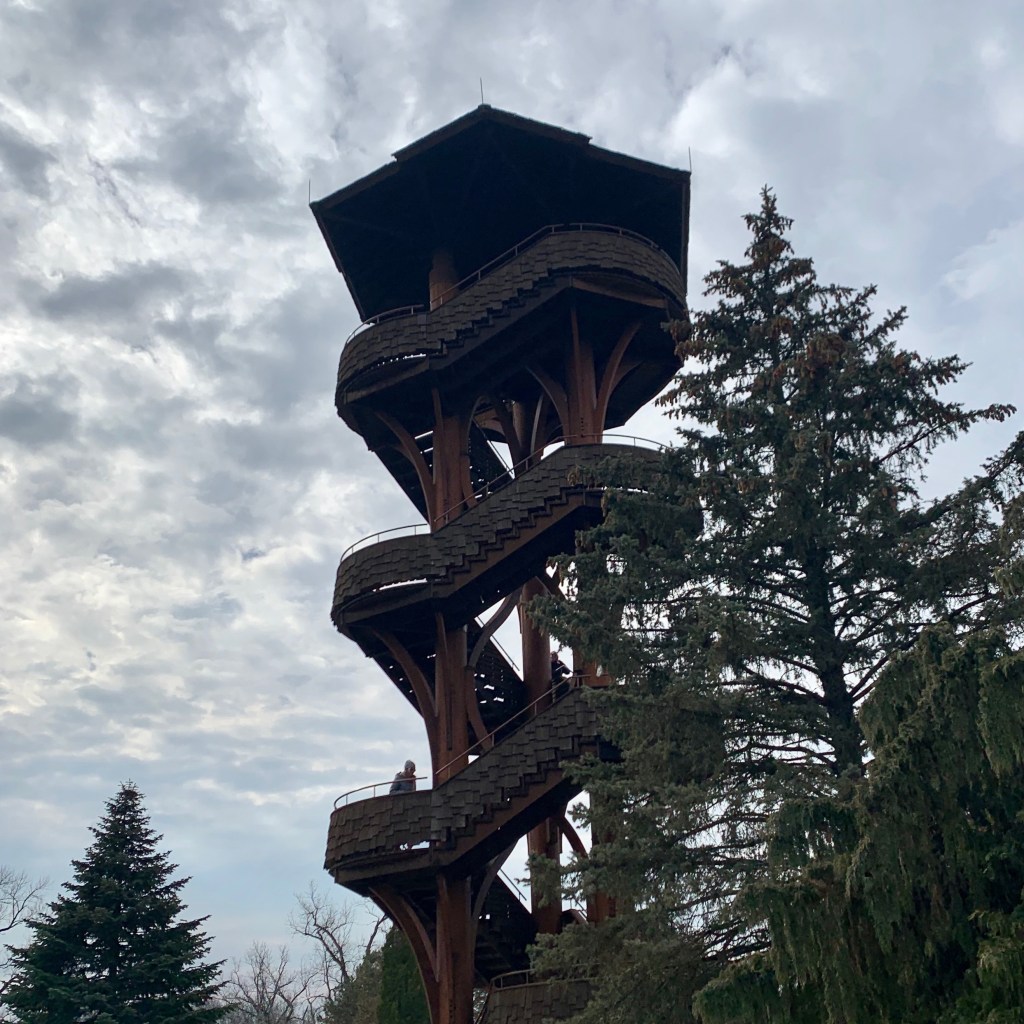
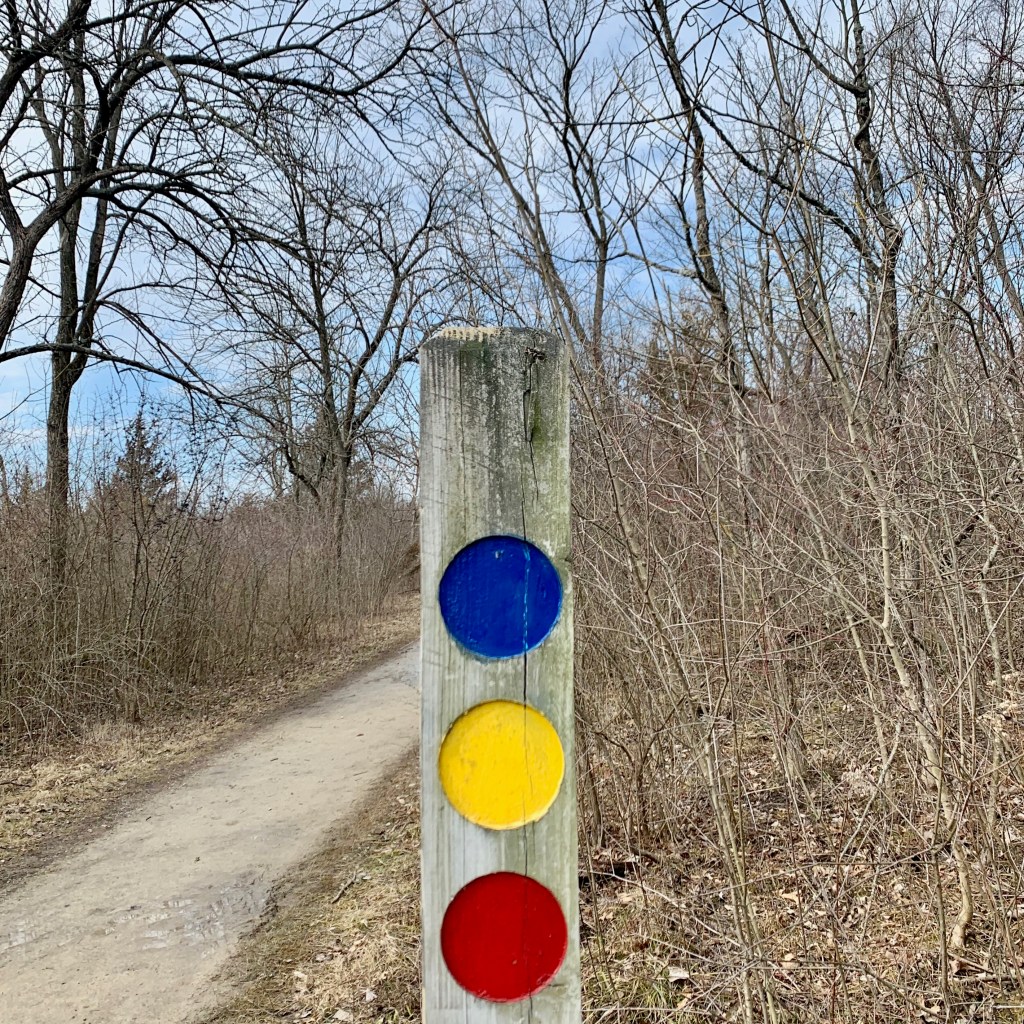
For the found Gestalt walk assignment I went to the Cox Arboretum which is one of the five Rivers MetroParks. Throughout the walk I tried to pay attention to the 6 Gestalt principles as well as the well-maintained park around me. The things that caught my eye the most were brighter colors, especially green, as it is only February still, so I tried to incorporate those into my photos. The architecture present in the arboretum was really interesting as well so I gathered some of that too. I think my most successful images are my containment ones, as the pipe is containing the area inside of it and the twisted branch is almost holding the tree in place. Some of the other principles weren’t as easy to find in nature like repetition and closure which don’t often occur naturally. However, because of my success on the containment photos I will be choosing one of those for my digital drawing.
The first project of the Gestalt designs and the principles of design photographs allowed me to be creative while also demonstrating my knowledge on the concepts. Regarding the project guidelines themselves, I liked how they were straightforward and not too creatively demanding, but on the flip side, the strictness of the project also limited my (and everyone else’s) potential of creating something very unique. Every final project looked very similar, however this is also the result of this being our first project. One thing I would consider changing is loosening up the guidelines on the Gestalt circle designs which could push the designs even further.
Throughout this project I learned how organized I have to be when completing work like this. Also, the critique somewhat validated my work as it seemed to me like my designs were understood and appealing to the class. I also found out that I like to be very precise, neat, and organized with my designs and artwork which will help my style evolve moving forward. Despite being a little creatively limited, this was a valuable project that will be a baseline for my work in the future.
In Ted Orland and David Bayles’ Art & Fear, they discuss the causes and effects of fear on the art we produce. They break it down into two major categories: fears about yourself, and fears about others. This is an interesting concept, because while one can be applied always (fears about yourself always come into play whenever you make art), fears about others isn’t necessarily always applicable because sometimes work isn’t shown to the public.
Many interesting points are made by Orland and Bayles when concerning fear about yourself. Specifically, emphasis is placed on a commonality of a fear of only pretending in your art, not having enough talent, a constant worry on perfection, an annihilation of work when not produced consistently, and having unrealistic expectations of our work. When you get in your own head when creating artwork, it’s easy to assume your work isn’t good enough or shouldn’t even be shown in public. However, this is just one of the things you must overcome on the path to improvement in your work. You have to trust the unconscious elements of your creative mind taking presence in what you create. Everyone creates something for a reason, and the same original idea can’t be fabricated by the same two minds. Everyone’s creative energy is unique, therefore everyone deserves a confidence in themselves when creating.
The other side of the argument is the aspects of fear about others judging our work. Some of the points made regard others maybe not understanding our work the way we intended, others not necessarily accepting it as “art,” and others not approving it or “liking” the work. The authors emphasize that yes, it can be scary to be vulnerable and put your work into the public for others to criticize and evaluate, but no one ever got better by not listening to the opinions of others. One of the most interesting points made earlier in this piece was the author who forced himself to write seven pages a day no matter what, which would really improve his work and (if he was listening) therefore the way in which the public viewed it as well. Making art consistently and confidently is something I struggle with, and it takes a lot of determination and creative steadiness to do this. Reading this definitely changes my opinion on what it means to be a (artist) graphic designer because I didn’t always consider it “art,” but it definitely is when the whole picture is considered. Like any artist, I have to stay consistent to be able to improve, increase my confidence in myself, and let go from allowing the critique of others get to me personally.
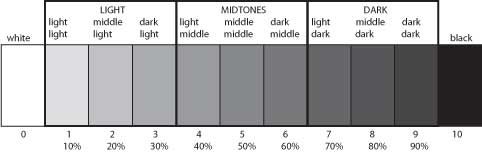
A key concept while thinking about the principles of design is value. Put simply, value is the emphasis on the lightness versus the darkness of color in a design or work of art. Below is a value scale depicting a basic concept of value. Value allows artists to create contrast or place emphasis on specific areas of their design just by making one area darker or lighter than another.
A basic value scale
The concept of value can be further split up when other ideas, such as distribution, volume, space, and lighting come into play. Perfected in the Renaissance, the term chiaroscuro (Italian for light and dark) allows value to create dimension when the contrast and drama between the light and dark is heightened.
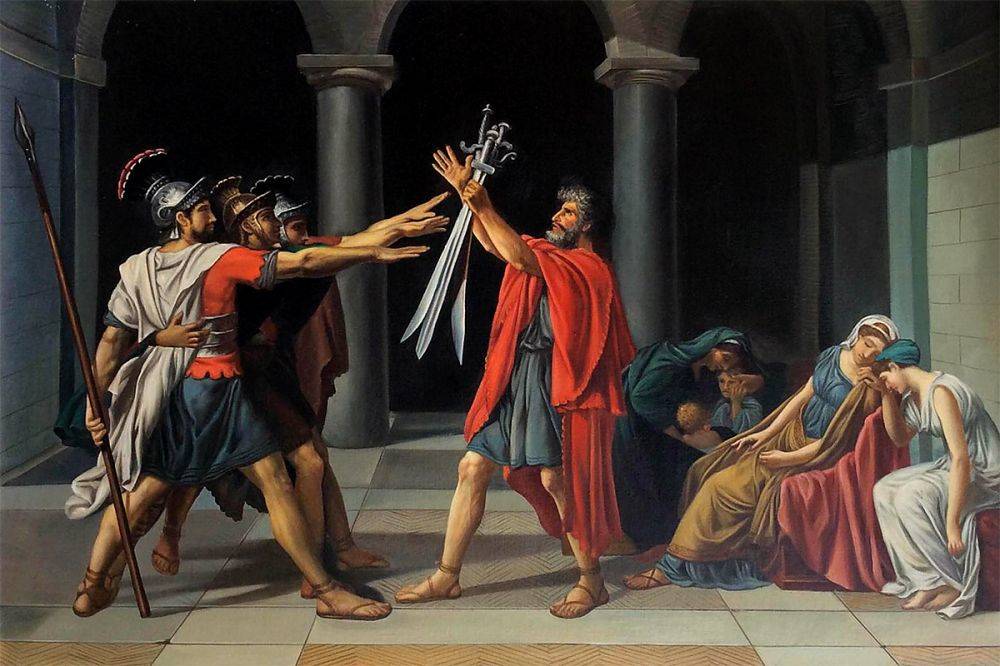
Another key concept when highlighting the principles of design is the use of unity and variety. Going hand in hand, unity essentially creates a wholeness from the successful combination of elements in an artwork. Unity can be conceptual (based on a variety of ideas) or visual (based on the elements of art), while variety is used to combine elements to create relationships to offset unity and add interest. Below, Jacque-Louis David’s Oath of the Horatii can be used to describe the relationship between unity and variety. The sons are united to their father, family, and patriotism through their movement towards the swords in the center, while variety is represented by the mourning women off to the right. This piece not only can be used to represent unity and variety, but repetition as well. Repetition is the use of multiple of the same element to create emphasis. The repeating hands and swords draw the viewer to the center of the image and what the gesture symbolizes.
Jacque-Louis David, Oath of the Horatii, 1784
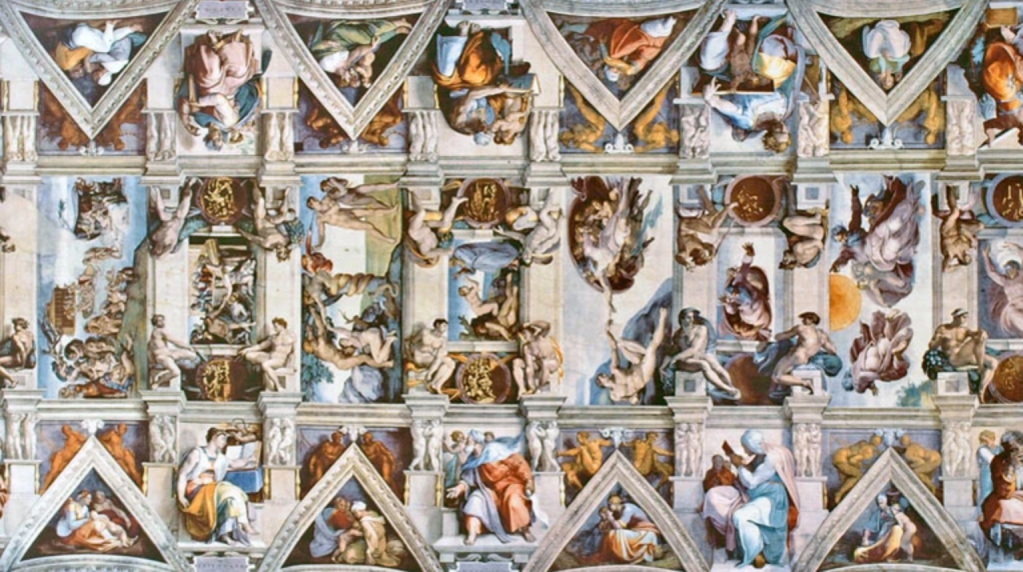
Another principle of design is an emphasis on patterns and grids. This is the use of a visual element’s repetition to create a system of design. This goes hand in hand with closure, which is the brain’s creation of a complete form. These principles can be represented in Michelangelo’s fresco paintings in the Sistine Chapel, as a pattern of multiple scenes in combination with the closure of the elements of the ceiling’s built-in supports creates a decoration with complex forms and backgrounds. Furthermore, the concept of rhythm (combination of elements repeated, with variations, to create a sense of movement) can also be applied here.
Michelangelo, Sistine Chapel Ceiling, 1508-1512
Many other concepts can be analyzed when considering principles of design and elements of art. Symmetry, or the sameness of one side to another (or approximate symmetry, which is used when one side is close enough to the other) allows for designs to be concise and straightforward. This leads into the idea of balance, or the arrangement of elements to create a feeling of stability.
Further, the ideas of scale (size of an object in relation to its standard or expected size) and proportion (size relationship of an object’s parts to the whole) can be applied to emphasize certain aspects of a design. A common example of this is the Hieratic scale, where significant figures are depicted the largest. This originally is shown in Egyptian art, but was made popular in several movie posters. The Star Wars movies used this in almost every movie poster they put out. Below is the movie poster for The Force Awakens, where all of the most important characters are shown the largest.
Star Wars: The Force Awakens movie poster, 2015
Most, if not all, of these principles and elements are used in order to create emphasis on a subject. Whether it’s a famous Monet or a middle-school art class project, any one of these can be used by itself or in conjunction with others in order to draw the viewer towards a specific area of the work in order to understand the piece’s subject.











 Peder Harvey Design