Throughout art history, artists have used different methods in order to create space in their pieces. There was even a time when artists didn’t understand and couldn’t grasp one and two point perspective to create space. The following few artworks display a variety of methods that convey space to the audience throughout art history.
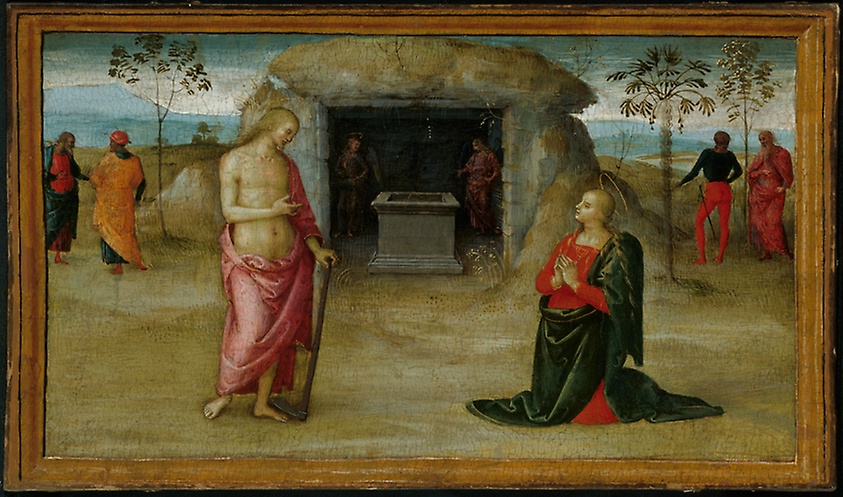
The work Noli Me Tangere from a gallery at the Chicago Art Institute uses a few basic methods to convey space. The scale shift of the people in the front from the people in the back creates a foreground-background idea where the smaller people appear farther away. An idea of atmospheric perspective of the clouded mountains creates a background in the distance, adding to the idea that the space in this painting is pretty vast and extensive.
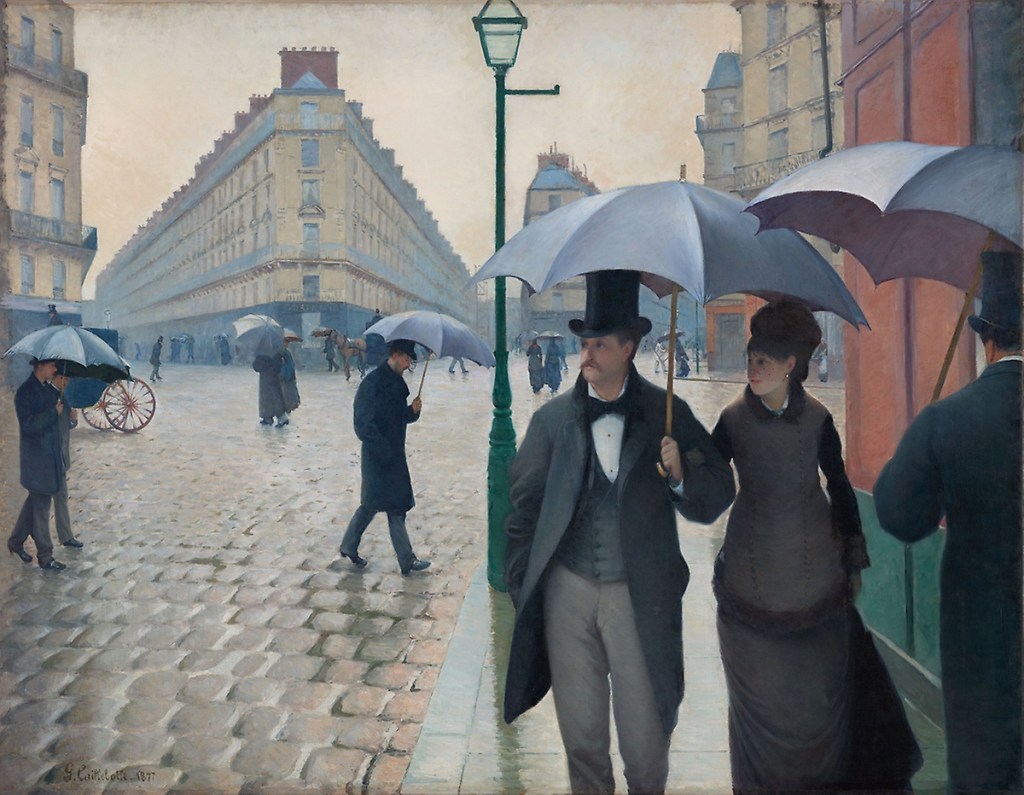
Another piece from the Chicago Art institute that has excellent ideas regarding space is Paris Street; Rainy Day by Gustave Caillebotte. This painting displays a great understanding for two point perspective as well as a scale shift of the people walking, making it appear that the smaller bodies are walking away from the viewer as the two in the foreground are walking towards the viewer.
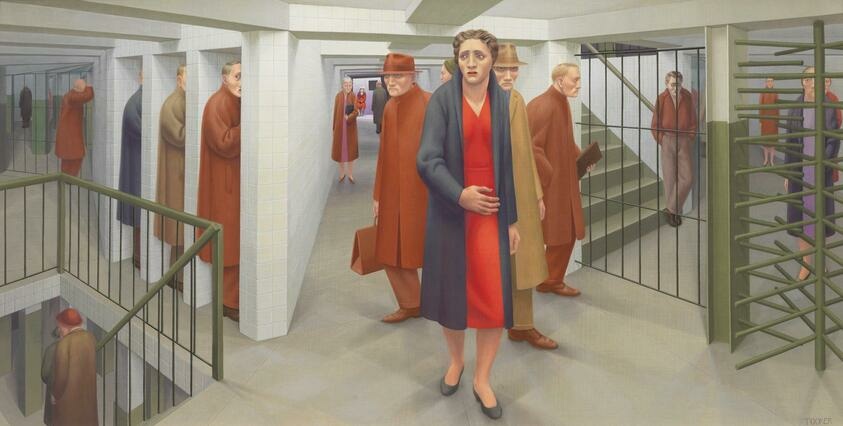
On display in the Whitney Museum of American Art, one of my “least” favorite (a very confusing one) paintings creates a very complicated illusion of space. The focal point of the woman seems confused about the space of the subway station, as should the viewer be. There seems to be an idea of two point perspective of the endless middle and left hallways, and a three dimensional aspect of the staircases going up/down into space. One of the main takeaways from this painting that I have every time I see it is the confusion of the woman as there appears to be no exits, and the mindless movement of the identical men in the subway that can allow for many different interpretations.

 Peder Harvey Design